How long does it take the average person to fall asleep?
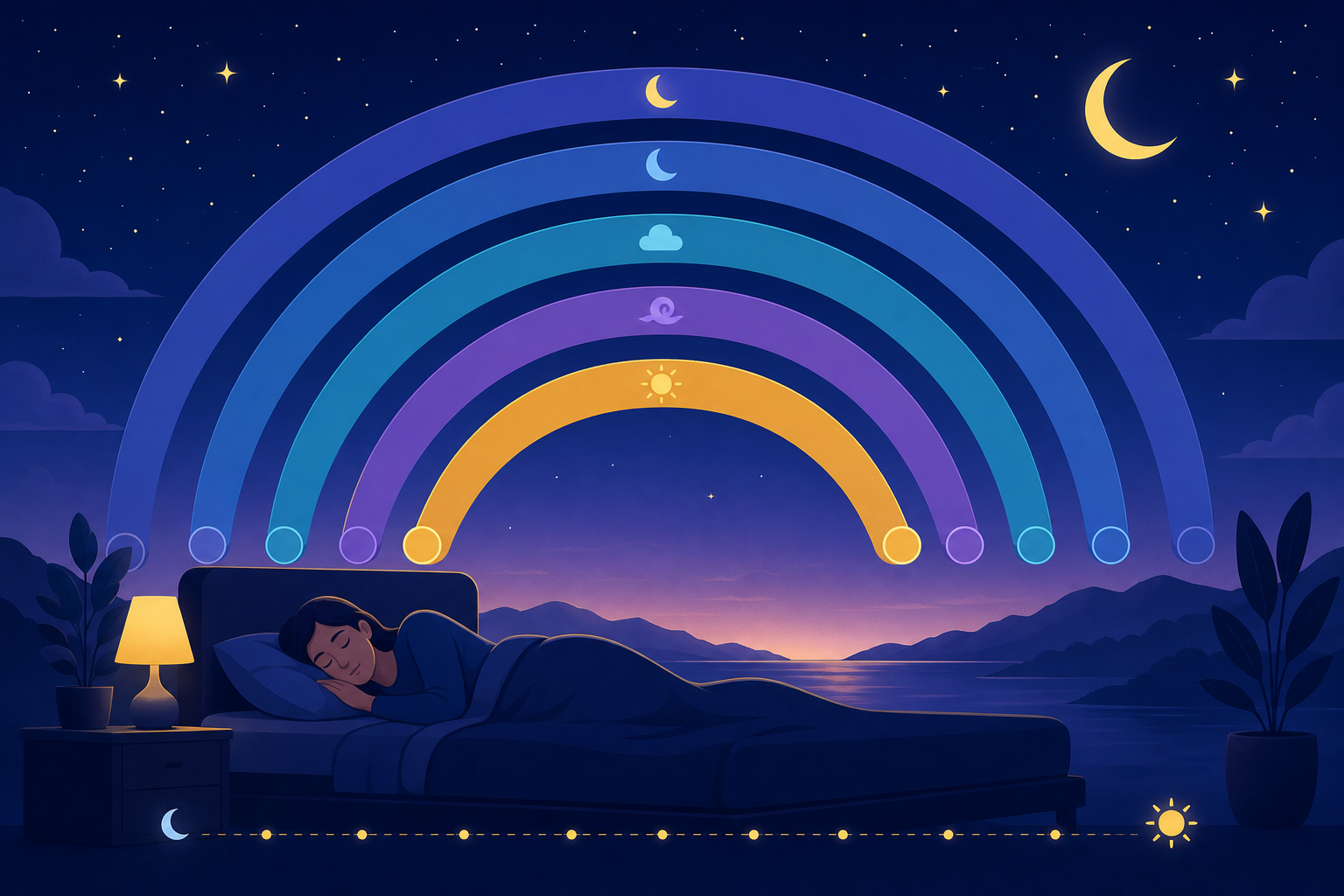
Many healthy adults fall asleep within approximately 10 to 20 minutes after turning out the lights, although occasional variation is normal. Taking longer after an exciting, stressful or unusual day does not necessarily indicate a problem. Regularly falling asleep almost immediately may mean you are sleep deprived. Frequently taking more than 30 minutes can be associated with an unsuitable bedtime, stress, caffeine, screen use or insomnia. The time between trying to sleep and actually sleeping is called sleep latency. You can estimate yours with a sleep diary, but avoid checking the clock repeatedly because that may increase anxiety. Persistent difficulty falling asleep, especially when it affects daytime functioning, should be discussed with a healthcare professional.
Use the Sleep Cycle Calculator to find the exact bedtime or wake-up time for you.
Try the Calculator →